
Clown School

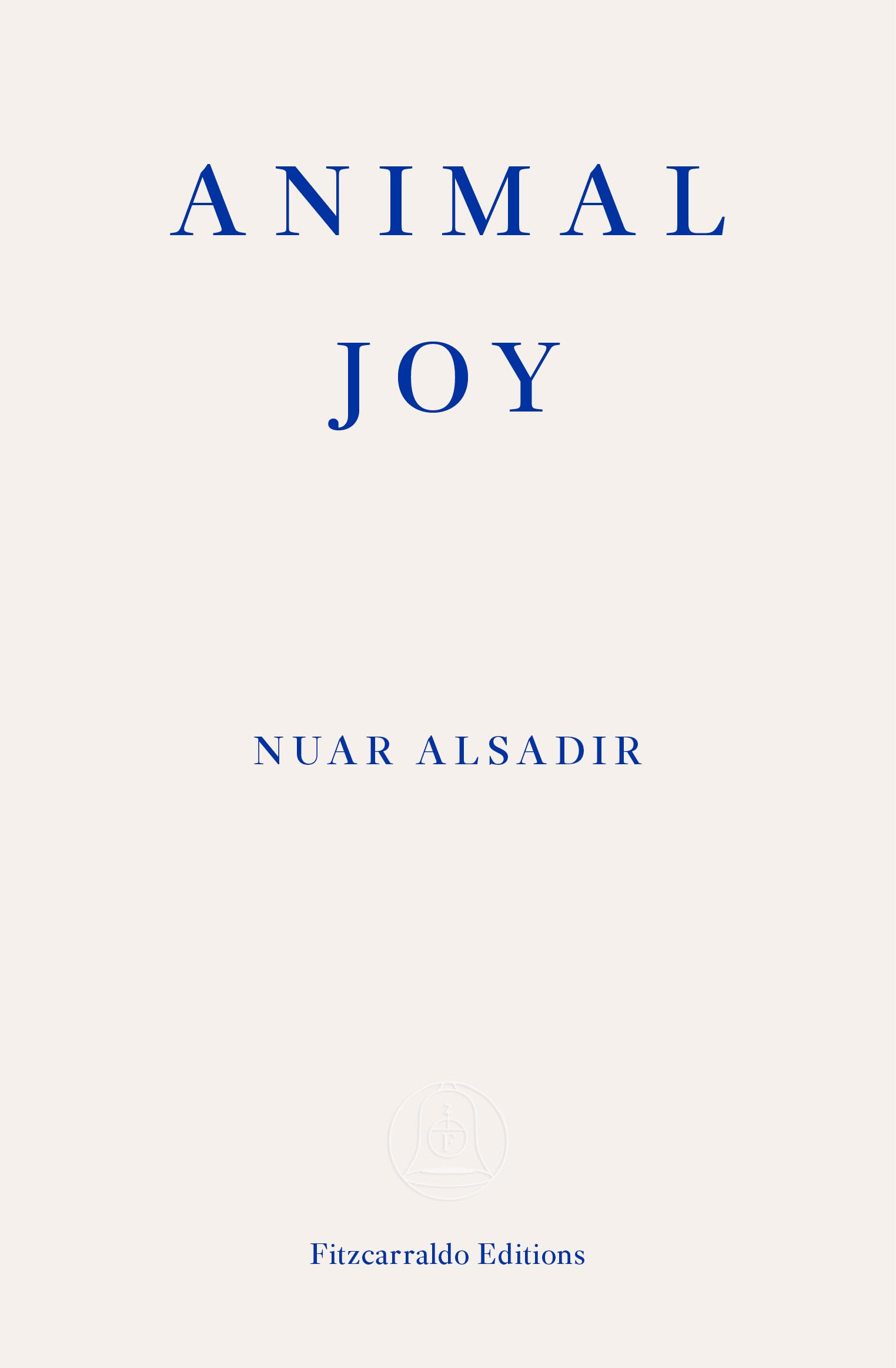
Is stand-up comedy akin to psychotherapy? Yes, argues psychoanalyst Nuar Alsadir in Animal Joy:
As part of my research … I had frequented comedy clubs and noticed how each performance, had it been delivered in a different tone of voice and context, could have been the text of a therapy session. Audience members … laughed less because a performer was funny than because they were honest.
Maybe, sometimes, though styles of stand-up vary. I like to imagine a therapist whose patient is Milton Jones:
If you’re being chased by a police dog, try not to go through a tunnel, then on to a little seesaw, then jump through a hoop of fire. They’re trained for that!
My father invented the cold air balloon … but it never really took off.
I was walking along the other day, and on the road, I saw a small, dead baby ghost. … Although thinking about it, it might have been a handkerchief.
Even accounting for context and tone of voice, I imagine this text would prompt fears of therapeutic miscommunication … though perhaps I underestimate how strange analysis can get.
Alsadir is more interested in clowning than in stand-up comedy. She takes a clown class with Christopher Bayes, who teaches physical comedy at the Yale School of Drama, and cites giants of the French clown tradition, Jacques Lecoq and Philippe Gaulier, who runs a clown school in France: “It is a theatre school,” he growls. “I hate standup comedy. I would never teach something so horrible.”
As Alsadir describes “clown”—the word is used as a noun for the practice—it shares the spirit of Freud’s fundamental rule, that patients say “whatever comes into their heads, even if they think it unimportant or irrelevant or nonsensical . . . or embarrassing or distressing.”
The clown gets up before an audience and risks letting whatever is inside them seep out, just as analysands in psychoanalysis free-associate, let their thoughts go wherever the mind takes them. While the analyst searches for the analysand’s True Self by way of material that reveals the unconscious, the actor in clown school seeks to discover it by way of their spontaneous expressions.
Alsadir gives very few examples, but here is one from a Guardian essay about Gaulier’s influence on British stand-up comedy:
I see plenty of failure in another exercise, which obliges students to sing along to songs in an unfamiliar foreign language—then keep singing, convincingly, after the music stops. It’s an inherently ridiculous activity, and the self-consciousness of some students is hard to witness. But Gaulier watches it beadily, for glimpses of the sensitive child behind the ill-at-ease, inhibited grownup.
How is clown school like psychoanalysis? Both suspend social convention, the disposition to accommodate and please. Alsadir draws on the work of D. W. Winnicott:
The False Self put forward in accordance with the codes and expectations of others brings social rewards at the expense of the True Self, the deepest core of our being, the part of us that feels “alive” and “real.” … “Only the True Self can be creative,” writes Winnicott. … The hallmark of a False Self, by contrast, is a lack of “creative originality.”
I find the clown model of creativity at once inspiring, baffling, and chastening. I fear that my response may be defensive, a manifestation of my False Self, conditioned to critical rationality. But I have questions…
Does every disposition into which we are socialized belong to the False Self? Or only ones that are in some way damaging?
Is the True Self independent of socialization? Or only forms of socialization that inhibit psychic unity?
Is the distinction between True and False Self structural, etiological, or normative?
On structural or etiological readings—on which the False Self is the socialized self, as distinct from the rest—it’s not clear why the “False Self” is necessarily false. Why should we get over everything in ourselves that cares for the approval and expectations of others? What about justified shame? On the normative reading—on which the True Self is the part of us whose activities are conducive to psychic health—it’s not clear why the True Self is emotional, rather than rational, as Alsadir goes on to claim:
What Winnicott terms the True Self, [Audre] Lorde would call “the erotic”—our “physical, emotional, and psychic expressions of what is deepest and strongest and richest within each of us.” … A sense of nonrational bodily aliveness marks one’s having accessed the wellspring of living energy characteristic of the True Self.
Either way, why believe that only the True Self is creative?
This is where defensiveness kicks in. The idea of clown school terrifies me, both because I am inhibited—being forced to sing in public, let alone to improvise singing in a language I don’t know, is my idea of a nightmare—and because whatever is creative in me feels continuous with reason.
The metaphysics bothers me, too: the temptation to hypostatize a “True Self” identified with part of me, rather than accepting that it’s all me, and embracing everything. Ironically, Winnicott shares this ideal:
One of Winnicott’s most important contributions to psychoanalysis was the idea of a “holding environment,” an atmosphere that communicates to another person—a child, an analysand, a lover—that whatever they express will be accepted: the good, the savage, and the ugly. Having the space and opportunity to be fully oneself gives a person the chance to become a self, as opposed to an assemblage of feelings and behaviors they have been conditioned to adopt in exchange for affirmation or love.
There’s a tension between Winnicott’s “holding environment” and the denigration of parts of me as “false”—a tension that could be resolved only by denying that the False Self is really me, when it is as much me as any other part.
At the same time, Alsadir and Winnicott are surely right that social conditioning and deference to others can suppress our creativity in damaging ways. Overcoming this through analysis or clown school, though scary, could be liberating. And the seeming tension in Winnicott’s views is not entirely his fault. There’s a paradox in the dream of total self-acceptance: what am I to do with the part of me that won’t accept myself?
BONUS CONTENT: Viggo Venn, clown (worth watching to the end).